
Science Park TU/e
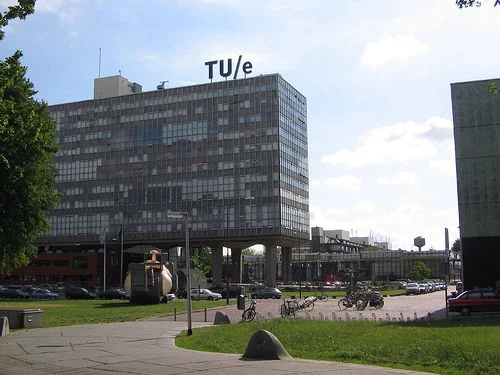
TU Eindhoven's Science Park faces a double challenge in terms of parking. On the one hand there is less space for cars to park at ground level, on the other hand the use of the campus will increase in the coming years. Part of the integrated solution is a new parking system, based on license plate recognition.
November 20, 2015
Bert Verheijen of the TU/e Housing Department: "Getting rid of parking at ground level as much as possible fits into the joint ambition of the municipality and TU/e to achieve a green campus. An ambition in which stimulating alternatives to the car also fits and the realization of built parking facilities in the future. The starting point here, by the way, is not the standard, but necessity." He explains: "We are going to monitor the current number of ground-level parking spaces and their use and adjust the size of the built facility to be realized accordingly."
Currently, the campus has 1,917 ground-level parking spaces, and 244 parking spaces in garages. These parking spaces are divided into twelve zones. They are used on normal days by about 1,700-1,800 cars and on peak days by about 2,000. Verheijen: "In addition, on extremely busy days, such as Open Days, additional parking facilities are temporarily provided on the grass." Verheijen expects that by encouraging alternatives such as public transport, bicycles or e-bikes and shared cars, a quarter of motorists will abandon their cars, leaving the number of ground-level parking spaces sufficient to accommodate the growth in the coming years.
Smart Parking
Verheijen has also been working on smart parking on campus for several years: "Initially, the idea was to use a navigation app to guide visitors to the campus to a parking space near the building and the person for whom they are coming. In doing so, the idea was that the availability of ground-level parking spaces would be shown in the app via an intelligent camera. The navigation app would also include a section for pedestrians: first from the parking lot to the building and then within the building to the relevant space." Although the idea was completely technically feasible, it ultimately fell through. Because of the many trees, it would become too costly to hang intelligent cameras and implement additional provisions for GPS reception in the buildings.
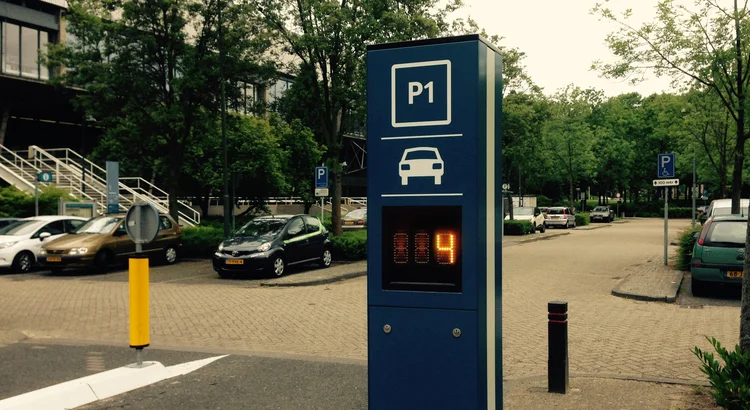
The introduction of the current license plate recognition system in mid-April coincided with the introduction of paid parking, also for employees. Verheijen explains how it works: "The employee entered the license plate number of his car in his personal digital parking pass. When he comes in that car to one of the three entrances on campus, the barriers open automatically because the system recognizes his car thanks to a camera scan at the entrance. The employee can enter up to two license plates on his parking pass. If he arrives in another car, he has two options: use his employee card or draw a ticket. "The scan cameras are not only at the three entrances, but also at the twelve parking zones." So the system also registers which zone the car is parked in. Also linked to the system is a parking reference system, which shows the amount of free parking spaces for each zone. By the way, everyone is free to park wherever they want; the system does not restrict access to a particular zone."
Subscriptions
Responsible for managing the system is Mirjam Jahnke, Department Head of Safety & Security and Location Management in the Internal Affairs Department. "We have now issued about 2,900 subscriptions to both TU/e employees and employees of companies located on campus. These include both individual subscriptions, where the employee pays, and employer subscriptions, where an employer pays for its employees. The individual employee paying himself or herself arranges this through a digital wallet. In the case of employer payment, the employer receives a monthly invoice for the number of subscriptions taken."
Every TU/e employee is also entitled to twelve days off based on full-time employment, in combination with the work pattern (how many days you are present at the TU/e). Jahnke: "The system first books these days per calendar year before any money is debited. This also means that employees cannot decide for themselves when they want to make use of their free days. The license plate recognition system aims to make parking easier for regular users of the TU/e Science Park. The intention is that the TU/e will also apply this for occasional visitors, who have already had to pay for parking since 2006. The installations will then be made suitable for mobile parking (GSM parking).
Source: Parking24
Project Photography
Project site
Science Park TU/E
University Parking Solution